Ornate Door Graphics & Illustrations
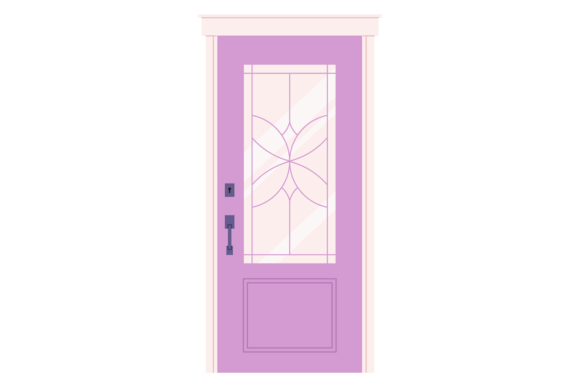
As someone who’s launched over 200 digital product listings across Etsy, Creative Market, and Shopify—mostly decorative design assets for crafters and small business owners—I opened Ornate Door. Street Facade Decorative Cl expecting a classic, high-signal doorway illustration. What I got was exactly that: a finely detailed, isolated street-facing door with layered scrollwork, subtle texture, and balanced negative space—rendered cleanly on white, with crisp vector paths and pixel-perfect transparency.
The mood is immediately clear: elegant, timeless, and quietly confident. It leans into vintage European architecture—not cartoonish or whimsical, but not overly formal either. Think café signage, boutique branding, or artisanal packaging rather than kids’ clipart or minimalist tech templates. Its visual personality sits at the intersection of decorative, handmade business, and premium printable design. It appeals to buyers who value craftsmanship in their visuals—Etsy shoppers browsing “vintage invitation templates,” Canva sellers building wedding suite bundles, or print-on-demand creators curating a “European cityscape” mug collection.
In real product-building scenarios, this graphic design asset flexes surprisingly well. I tested it across six product types before finalizing my shop update:
- SVG design for Cricut users: The vector paths are smooth, with no stray anchor points—ideal for cutting intricate ironwork details on vinyl or cardstock. Works especially well for ornamental wall decals or layered greeting cards.
- PNG design with transparent background: Perfect for planner stickers, digital scrapbooking kits, or blog graphics where you need clean layering without white halos.
- Sublimation design: Scaled cleanly to 300 DPI at 8" wide—no pixelation on tumblers or ceramic mugs. The contrast holds up even on light-colored polyester blends.
- Printable wall art: Paired with muted linen-textured backgrounds in Canva, it reads as gallery-worthy at 16x20". No oversaturation or muddy shadows.
- Canva template: Used as a focal element in a “Parisian Café” social media kit—anchored the visual hierarchy without competing with body text.
- Design bundle: Bundled with wrought-iron gate, cobblestone texture, and serif typography samples. Customers responded strongly to the cohesive “old-world charm” theme.
For product presentation, Ornate Door. Street Facade Decorative Cl elevates perceived value instantly. In mockup previews—especially on rustic wood or marble surfaces—it signals attention to detail. As an Etsy product thumbnail, its strong silhouette and clear central shape boost click-through potential, even at small sizes. When grouped with complementary assets (like vintage key icons or handwritten script fonts), it strengthens brand consistency across seasonal collections—say, a spring “European Getaway” digital download pack.
It shines brightest in contexts where decorative weight matters: large-format printable products, themed merchandise graphics, social media promos for boutique brands, and creative marketplace listings targeting interior designers or wedding planners. On product mockups—especially for tote bags, framed prints, or enamel pins—it adds instant narrative depth. And because it’s delivered in EPS, JPG, SVG, and transparent PNG, you’re covered whether your buyer uses Adobe Illustrator, Cricut Design Space, or free tools like Photopea.
That said, there are places where it needs careful handling. Avoid using it as a tiny sticker element—those delicate scroll details won’t resolve clearly below 1.5". Skip overly complex layouts where it competes with heavy textures or multiple focal points; its strength is elegance, not busyness. Don’t place it directly on dark backgrounds without testing contrast first—the original white-isolated version assumes light context. And if you’re designing for precise die-cutting (e.g., kiss-cut sticker sheets), inspect the SVG cut lines manually—some inner filigree may require slight simplification for reliable machine output.
Before publishing any listing built around Ornate Door. Street Facade Decorative Cl, here’s what I do every time:
- Test it in a real product mockup—not just a preview, but one rendered at actual size and lighting.
- Preview the thumbnail at 120px width to assess click-through potential.
- Check how it renders on both white and charcoal backgrounds—especially for social media graphics and packaging design.
- Print a test copy on matte paper and glossy photo paper to verify color fidelity and edge clarity.
- Open the PNG in a layer-based editor to confirm full transparency—no hidden white pixels along curves.
- Import the SVG into Cricut Design Space and run a quick “flatten and cut” simulation to validate path integrity.
- Confirm resolution: all raster files are 300 DPI at minimum 2400px on longest side—sufficient for most print-on-demand specs.
- Organize customer files clearly—label each format, include a brief usage note, and group by intended use (e.g., “Cricut-ready SVG,” “PNG for Canva,” “JPG for mockups”).
- Pair it with type: it works beautifully with serif fonts (Playfair Display), clean sans serifs (Montserrat), soft scripts (Dancing Script), and display fonts with architectural flair (Cinzel).
- Double-check the commercial license: this asset permits finished product resale, but always verify terms apply to your specific platform (e.g., some POD services require attribution or restrict certain categories).
Bottom line? Ornate Door. Street Facade Decorative Cl isn’t a trend-chasing novelty—it’s a quietly versatile illustration with staying power. It supports small business branding without shouting, enhances digital product credibility through refined execution, and fits naturally into commercial workflows from Cricut project to t-shirt design. If your shop serves customers who appreciate thoughtful detail—whether they’re designing a nursery print, launching a café brand, or building a design bundle for Creative Fabrica—you’ll find consistent, professional utility in this asset. Just remember: its value multiplies when paired intentionally—not plastered everywhere, but placed with purpose.