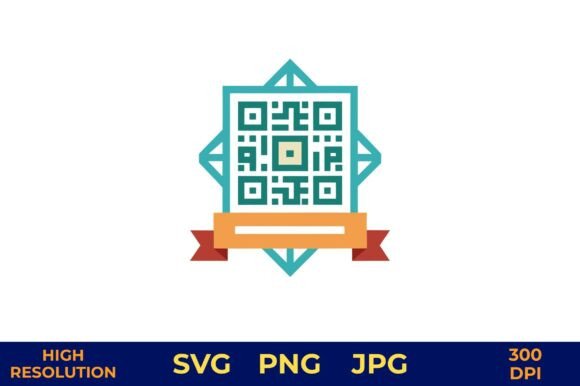
QR Code on Decorative Award Ribbon: Graphics & Illustrations for Local Branding
First Impression: A Spark of Celebration, Not Just a Scan
When I opened the QR Code on Decorative Award Ribbon, my first thought wasn’t “functional utility”—it was “this feels like a moment of recognition.” The diamond frame wraps the QR code like a tiny trophy ribbon, evoking handmade awards, boutique excellence, and local pride. It’s not clinical or tech-forward—it’s warm, intentional, and quietly confident. For a small business owner—say, a lavender soap maker in Asheville or a maple syrup brand in Vermont—this graphic design asset lands as premium but approachable, elegant but grounded. It suggests craftsmanship, authenticity, and care—not corporate automation. That mood shift matters: a QR code stops being transactional and starts feeling like an invitation.
Where This Illustration Earns Its Place in Real Business Design
I recently used the QR Code on Decorative Award Ribbon across three real projects: a seasonal candle line’s gift box label, a children’s book illustrator’s limited-edition print series, and a neighborhood coffee roaster’s “Local Roast Rewards” loyalty card. In each case, it elevated the visual hierarchy without overwhelming the core message. Here’s where it delivers tangible value:
- Product labels and hang tags: Adds instant credibility—like your product just won something (and it has!)
- Packaging accents: Works beautifully on kraft paper boxes, matte sticker sheets, or foil-stamped sleeves
- Thank-you cards and printable inserts: Turns routine packaging into a branded experience customers photograph and share
- Social media graphics: Serves as a decorative banner in Instagram Stories or Pinterest pins—scan to see behind-the-scenes, recipes, or origin stories
- Seasonal campaign visuals: Perfect for holiday gift sets, farmers’ market bundles, or “Small Business Saturday” posters
Why It Strengthens Local Business Presentation
For small business branding, consistency isn’t just about color palettes—it’s about emotional resonance. The QR Code on Decorative Award Ribbon supports that in measurable ways:
- Stronger first impression: On shelf or screen, it signals quality before the customer even reads the copy
- Better product recognition: That diamond frame becomes a subtle visual signature across touchpoints
- Clearer visual hierarchy: Guides the eye naturally from award motif → QR code → call-to-action
- More consistent brand identity: When paired with hand-drawn typography or earthy tones, it reinforces artisan values
- Improved customer trust: Feels human-made, not algorithm-generated—critical for handmade business and local food brands
Where It Shines—and Where to Pause
This illustration works best when used intentionally—not decoratively. It thrives in contexts where celebration and recognition align with your brand story: boutique visuals, hero graphics for product mockups, thank-you cards tucked into subscription boxes, or festive packaging for holiday launches. It adds polish without pretension.
Use carefully in these scenarios:
- Formal corporate branding: Too playful for law firms or B2B SaaS
- Very small labels: The diamond frame loses definition below 0.75” width—test print at actual size
- Crowded packaging layouts: Avoid stacking it beside dense ingredient lists or legal disclaimers
- Luxury minimalist brands: Conflicts with ultra-clean aesthetics (think monochrome serif + negative space)
- Low-contrast backgrounds: The transparent PNG relies on contrast—preview over your exact substrate
Practical Brand Designer Notes You Can’t Skip
Before dropping this into your next project, run these checks:
- Test it on real packaging mockups: Print a 2” version on your actual label stock—does the diamond frame hold crispness?
- Check black-and-white usage: Will it scan reliably if printed in single-color foil or blind emboss?
- Preview on small labels: At 12mm x 12mm, does the QR remain scannable? Always test with multiple devices.
- Test it with your brand fonts: Try pairing it beside serif (e.g., Playfair), sans serif (e.g., Montserrat), script (e.g., Pacifico), and handwritten styles—does it complement or compete?
- Review SVG editability: The vector file lets you adjust spacing, scale the diamond independently, or recolor elements—don’t treat it as static clipart
- Confirm commercial licensing: Ensure your license covers physical product sales, client work, and social media graphics—especially for food labels or retail packaging
- Compare with competitor packaging: Does it stand out on shelf—or blend in with generic QR stickers?
A Final Thought for Creative Entrepreneurs
The QR Code on Decorative Award Ribbon isn’t just another digital product—it’s a bridge between digital convenience and human connection. For a florist adding it to wedding bouquet tags, a candle brand using it on matchbox lids, or a coffee shop printing it on compostable sleeve wraps, this graphic design asset says: “We made this with pride—and we want you to know more.” In an age of noise, that quiet confidence is rare. Used thoughtfully, it supports stronger brand identity, more memorable packaging design, and marketing visuals that feel personal, not programmed. Whether you’re building a new brand from scratch or refreshing a decade-old label, this illustration earns its place—not as decoration, but as intention made visible.