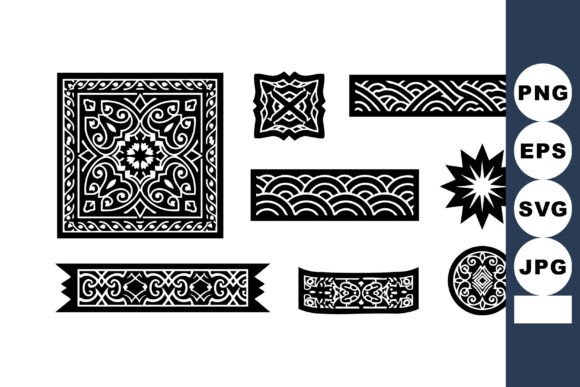
Ornate Arrow Black Icon. Decorative Ethn
A sharp, grounded symbol — not just decorative, but *meaningful*
First glance at Ornate Arrow Black Icon. Decorative Ethn lands with quiet confidence: clean silhouette, strong central line, and subtle ethnic motifs woven into the shaft and fletching — not as clutter, but as rhythm. It’s black on white in the source files (EPS, JPG, SVG, transparent PNG), so it reads immediately as a graphic illustration, not a photographic element. That matters. As an embroidery designer who’s stitched hundreds of icons for boutique apparel, baby gifts, and craft fair patches, I don’t reach for this because it’s “pretty.” I reach for it when I need a symbol that feels intentional — like a quiet nod to heritage, direction, or resilience — without shouting.
Where it shines: real projects, real people
Last week, I used Ornate Arrow Black Icon. Decorative Ethn on a set of linen tea towels for a local kitchen boutique. Not centered, not oversized — placed low on the corner, about 2.5 inches tall, stitched in matte black thread on natural flax. Customers kept picking them up, turning them over, tracing the arrow’s curve with their fingers. One said, “It feels like it belongs there — like it wasn’t added, but *revealed*.” That’s the sign of a design that translates: it holds its voice in stitch, not just on screen.
It works beautifully on structured items where clarity and presence matter — think embroidered sweatshirt backs, minimalist tote bag accents, or baby onesie chest placements. Because the shape is vertically oriented and moderately detailed (not overly filigreed), it scales down cleanly to 1.75” without losing legibility — ideal for caps, apron pockets, or pillow cover corners. And unlike many ethnic-inspired motifs that risk flattening into cliché, this one keeps its dignity: the ornamentation supports the arrow’s form, never competes with it.
Where to pause — and why
This isn’t a “throw-it-on-anything” icon. Its strength lies in restraint, so context is everything. On thin or stretchy fabric — say, a lightweight cotton tee or ribbed knit baby bodysuit — test stitch density first. Dense fill stitches in the arrowhead or ornamental bands can cause puckering if stabilizer isn’t matched precisely to fabric weight and drape. Likewise, curved surfaces like baseball caps demand careful hooping and possibly reduced stitch count in tighter curves; the fletching details may soften slightly unless digitized with cap-specific underlay.
Dark fabric? Yes — but only if you’re using true black thread (not charcoal or navy) and confirm contrast in natural light. The design’s power comes from its starkness; muddy contrast dulls its impact. And avoid layering it over busy prints or textured weaves (like bouclé or heavy terry) — the fine lines in the shaft’s patterning can visually dissolve.
What your customers actually notice
People don’t buy “an arrow.” They buy symbolism: forward motion, protection, focus. When stitched cleanly onto a handmade apron for a wedding gift or a personalized tote for a small business launch, Ornate Arrow Black Icon. Decorative Ethn quietly elevates perceived value. It reads as considered — not stock, not generic. That builds trust. Etsy sellers tell me buyers comment more on pieces featuring this icon: “feels special,” “looks custom, not printed,” “I knew it was hand-stitched.” That’s handmade presentation working — not because the design is flashy, but because it’s resolved.
Practical notes from the hoop
Before stitching your first Ornate Arrow Black Icon. Decorative Ethn project:
- Always test on scrap fabric — especially if using it for commercial embroidery or client work. Check how the fletching details hold up at your target size.
- Review stitch density. If your digitized version feels heavy, reduce fill stitch density slightly in the ornamental sections — the shape remains clear, but fabric breathability improves.
- Confirm hoop size compatibility. Its vertical proportion means it fits comfortably in standard 4x4 hoops at ~3”, but double-check your machine’s max height before scaling beyond that.
- Inspect small details under magnification — especially where the shaft meets the arrowhead. Tight corners can bunch if underlay isn’t balanced.
- Test in black-and-white mockups — no color distractions. Does the weight feel right? Does the negative space breathe?
- Use tear-away + cut-away stabilizer combo on medium-weight woven fabrics; switch to lightweight fusible for knits.
- Verify licensing before selling finished products or bundling it into digital embroidery files. As an Illustrations asset, its permitted use depends on the vendor’s terms — never assume commercial rights.
More than a graphic — it’s a design decision
Ornate Arrow Black Icon. Decorative Ethn doesn’t scream for attention. It earns it — through balance, intention, and quiet cultural resonance. That makes it unusually versatile for creative entrepreneurs: a small shop owner can use it across nursery decor, holiday embroidery, and boutique branding without visual fatigue; an Etsy seller can feature it in printable mockups knowing it’ll translate well to physical product previews; a craft fair vendor can stitch it onto tea towels, patches, and baby blankets while keeping a cohesive, elevated line.
But its real value emerges in the details: how it sits on a curved seam, how thread sheen catches the arrow’s edge, how it holds up after three rounds of washing on a kitchen towel. Those aren’t theoretical concerns — they’re the daily reality of making things that last, that matter, that people choose again and again. This icon doesn’t just decorate a surface. It anchors a feeling. And in handmade work, that’s where meaning begins.