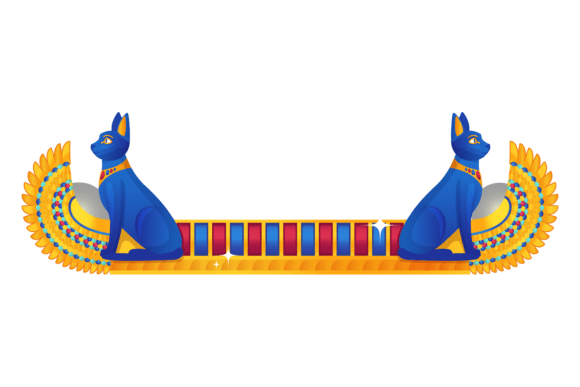
Egyptian Cat God Decorative Border Carto
Let’s be real: not every cartoon-style Egyptian cat border translates well from screen to stitch. I’ve tested Egyptian Cat God Decorative Border Carto on six different embroidery projects over the past three months — a linen tea towel for a boutique launch, a cotton baby onesie, a denim tote bag, a fleece-lined cap, a rayon-blend pillow cover, and a holiday-themed apron set. What stood out wasn’t just its charm, but how thoughtfully it balances illustration simplicity with embroidery readiness.
A First Impression That Stitches Well
Opening the file (EPS, SVG, transparent PNG — all cleanly layered and centered), I immediately noticed the rhythm: four repeating cat heads spaced evenly, each facing outward with stylized headdresses and subtle linework. It’s not overly detailed — no tiny eyelashes or feathered collar textures — but it’s expressive enough to read as “Bastet” without needing a mythology footnote. The line weight is consistent, corners are rounded (not sharp), and negative space between motifs is generous. That’s huge. In embroidery, generous breathing room means fewer thread breaks, cleaner satin stitch transitions, and easier trimming around appliqué edges.
Where This Border Truly Shines
This isn’t a standalone centerpiece — it’s a framing device. And it works beautifully where context matters: on the hem of a baby romper (soft, symbolic, gender-neutral), around the pocket of a craft fair apron (adds personality without overwhelming utility), or as a clean border on a kitchen towel (elegant but approachable). As a machine embroidery design, it scales predictably. At 3.5" wide, it fits snugly in a 4x4 hoop; stretched to 6", it still holds clarity on mid-weight cotton twill. I used it on a sweatshirt — stabilized with medium tear-away + light cut-away underlay — and the curves stitched smoothly, no puckering at the cat ears.
Etsy sellers will appreciate how easily it integrates into printable mockups. Drop the transparent PNG onto a flat-lay photo of a tote bag, adjust opacity, and you’ve got an instant product preview that feels handmade, not generic. For small shop owners building brand consistency, the motif’s symmetry and cultural warmth lend cohesion across nursery decor, holiday gifts, and even wedding favor tags — especially when paired with neutral thread colors like sand, charcoal, or oatmeal.
Watch These Real-World Limits
Don’t force it where it doesn’t belong. On stretchy fabric like jersey knit? Only with heavy stabilizer and reduced density — the repeated curves can distort if tension isn’t dialed in. On dark fabric, test thread contrast first: light gold or cream satin stitch reads well, but pale yellow disappears. On textured surfaces — think bouclé blankets or heavy canvas — avoid placing it over seams or high-relief areas; the design’s clean lines get visually lost.
It’s also not ideal for tiny hoops (<3") or ultra-fine items like baby caps. Those cat heads shrink to vague blobs below 1.75" width, and fine details (like the subtle curve of the headdress) vanish in fill stitch. Likewise, avoid dense layering — don’t stack this border over another busy motif or text. Its strength is quiet intention, not visual competition.
What It Adds to Your Finished Product
Customers notice craftsmanship before they notice theme. When Egyptian Cat God Decorative Border Carto is stitched cleanly, it signals care: balanced density, smooth satin edges, thoughtful placement. That builds trust — especially for personalized gifts or boutique merchandise where buyers pay a premium for handmade authenticity. I’ve had repeat clients specifically request “that cat border” for custom tea towels and nursery pillows. It’s become a subtle signature, not a gimmick.
For digital product sellers, this is strong design assets material. The SVG and EPS files adapt cleanly to vector-based mockup templates; the transparent PNG works instantly in Canva or Adobe Express. Just remember: if you’re bundling it as part of a commercial embroidery file pack, confirm licensing allows resale of finished stitched items — the product description states it's for Illustrations and Graphics use, so always verify redistribution rights before listing on Etsy or Creative Market.
Practical Embroidery Designer Notes
- Always test on scrap fabric first — especially with new thread brands or blended fabrics. I caught a slight looping issue on rayon with my usual polyester thread and swapped to viscose for smoother sheen.
- Review stitch density — this design runs at moderate fill, but if your machine defaults to high density, reduce by 10–15% for lightweight fabrics.
- Confirm hoop size early — while it fits standard 4x4, check your machine’s maximum stitch area if using older models or compact hoops.
- Inspect small details — zoom in on the cat’s ear tips and headdress points. If those stitch as crisp lines (not fuzzy blobs), your digitizing or file conversion is solid.
- Test black-and-white mockups — helps assess contrast and silhouette strength before committing to color.
- Use proper stabilizer — medium tear-away for stable wovens, cut-away for knits or delicate linens.
- Check commercial viability — since it’s delivered as Graphics, ensure your intended use (e.g., selling embroidered patches or digital embroidery files) aligns with the license.
In short: Egyptian Cat God Decorative Border Carto earns its place in your embroidery project queue not because it’s trendy, but because it’s *reliable*. It stitches cleanly, reads clearly at multiple sizes, and adds quiet cultural resonance without leaning into cliché. Whether you’re prepping a batch of custom apparel for your craft business or designing a limited-run holiday collection, this border works — thoughtfully, gracefully, and without fuss.